
Bantu Gazette

Bantu Gazette
  • Policy & Governance
  • Development & Impact
  • Business, Trade & Economy
  • Energy
  • Changemakers
  • Culture & Identity
  • Perspectives
  • Magazine
Menu
  • Black Frame Studio
  • Magazine

African, Caribbean Leaders Press for Reparations Following Landmark U.N. Slave Trade Resolution

At a conference in Accra, Ghana, leaders urged the world to move beyond acknowledging slavery's legacy and pursue meaningful reparatory action

African, Caribbean Leaders Press for Reparations Following Landmark U.N. Slave Trade Resolution

Next Steps High-Level Consultative Conference on Reparatory Justice in Accra

Felix Tihby Felix Tih
June 20, 2026
Reading Time: 2 mins read

African, Caribbean Leaders Press for Reparations Following Landmark U.N. Slave Trade Resolution

At a conference in Accra, Ghana, leaders urged the world to move beyond acknowledging slavery's legacy and pursue meaningful reparatory action

African, Caribbean Leaders Press for Reparations Following Landmark U.N. Slave Trade Resolution

Next Steps High-Level Consultative Conference on Reparatory Justice in Accra

African, Caribbean Leaders Press for Reparations Following Landmark U.N. Slave Trade Resolution

Next Steps High-Level Consultative Conference on Reparatory Justice in Accra

Felix Tihby Felix Tih
July 11, 2026
Reading Time: 2 mins read

ACCRA

African and Caribbean leaders used a high-level conference in Ghana to push for concrete action on reparatory justice, arguing that a landmark United Nations resolution recognizing the transatlantic slave trade as one of humanity’s gravest crimes must be followed by measures aimed at addressing its enduring consequences.

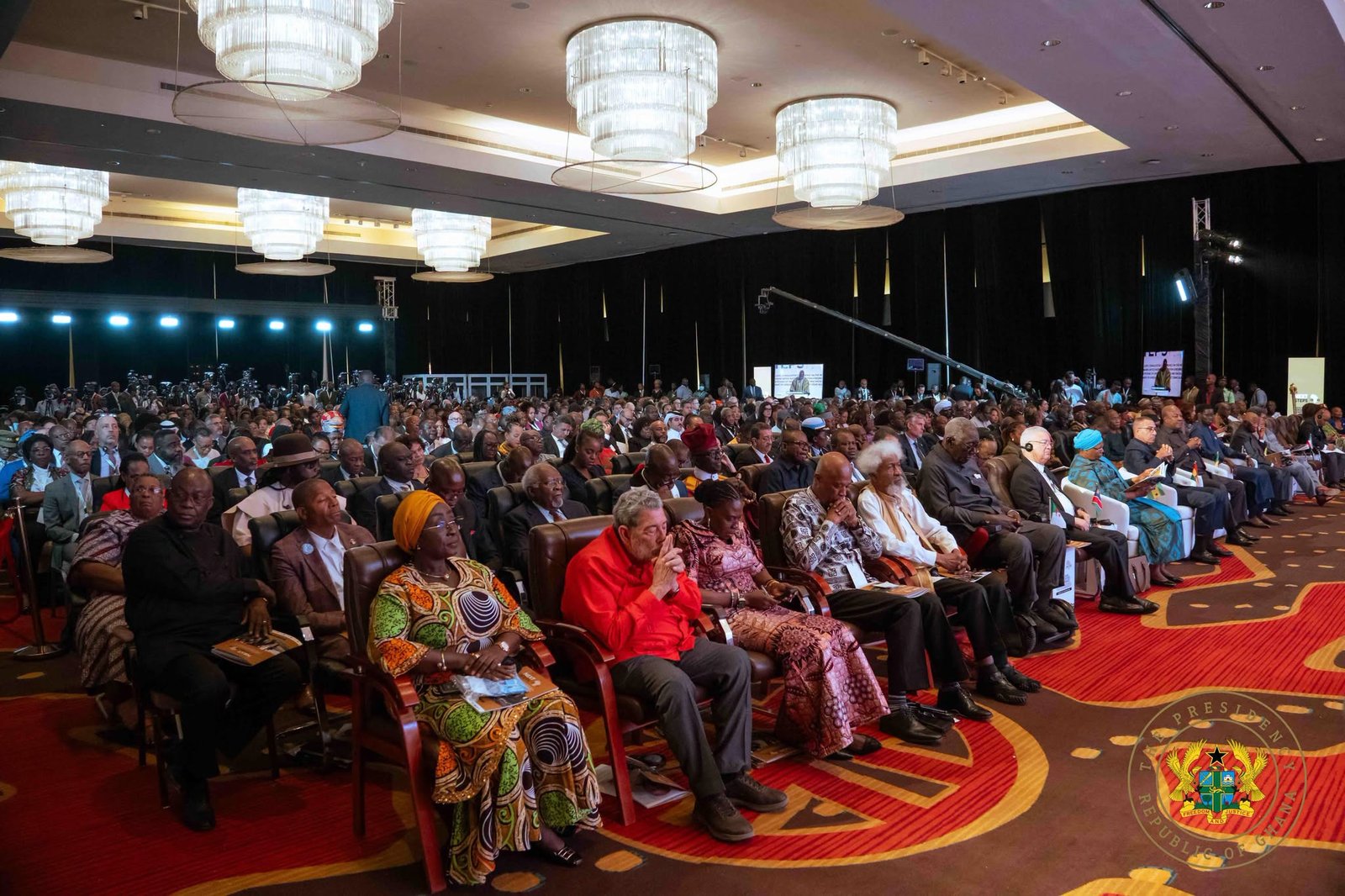
The gathering in Accra brought together heads of state, government officials, legal experts and representatives of the African diaspora to discuss the implementation of U.N. General Assembly Resolution A/RES/80/250, adopted in March 2026.

The resolution, spearheaded by Ghana, describes the transatlantic slave trade as the “gravest crime against humanity” and calls for reparations.

It was approved by 123 countries, while Argentina, Israel and the United States voted against it and 52 countries abstained.

Opening the conference, Ghanaian President John Dramani Mahama said the international community must move beyond acknowledging historical injustices and begin pursuing “meaningful action, truth-telling, and reconciliation.”

He announced plans to establish three international panels focused on reparatory justice, restitution of cultural artifacts and legal pathways for redress.

Mahama said the effects of the transatlantic slave trade continue to shape institutions and inequalities generations later.

While current generations did not commit the atrocities of slavery, he said, they share a responsibility to address its lasting consequences through dialogue, remembrance and justice.

The conference highlighted growing efforts by African and Caribbean nations to develop a common position on reparations, an issue that has gained momentum in international forums yet remains politically contentious.

More Than Symbolic

Next Steps High-Level Consultative Conference on Reparatory Justice in Accra

Senegalese President Bassirou Diomaye Faye described the U.N. resolution as a significant advance but cautioned against allowing it to remain symbolic.

He said reparatory justice should be viewed as a moral and historical imperative aimed at building a more balanced and humane international order rather than as a process directed against any particular nation or people.

Namibian President Netumbo Nandi-Ndaitwah linked the debate over reparations for slavery to broader African demands for historical accountability.

She pointed to Namibia’s own pursuit of justice over the genocide committed against the Ovaherero and Nama communities during German colonial rule, describing it as part of a wider struggle for recognition and redress.

Calling for unity among Africans and the diaspora, Nandi-Ndaitwah said genuine reconciliation depends on acknowledging historical truths and restoring dignity to those affected by past injustices.

Liberian President Joseph Boakai pressed for what he called action beyond symbolism, arguing that the economic and developmental challenges facing many African countries remain connected to the legacy of slavery and colonial exploitation.

He proposed creating an African Union-United Nations expert commission to design a global reparatory justice mechanism and called for stronger cooperation among African governments, Caribbean nations and diaspora organizations.

Boakai also advocated the return of cultural artifacts and greater investment in research and education about the slave trade, saying centuries of forced labor and resource extraction generated wealth that helped build economies elsewhere while leaving lasting damage across Africa and the Global South.

Barbados Prime Minister Mia Amor Mottley said the issue carries particular significance for her country because Barbados’ colonial legislature enacted the 1661 Slave Code, legislation that helped institutionalize slavery by treating Africans as property.

She said reparatory justice is ultimately about repair, healing and unity between Africa and its diaspora.

The conference drew leaders from across Africa and the Caribbean, including the presidents of Senegal, Namibia, Liberia and São Tomé and Príncipe, as well as senior representatives from more than 80 countries.

 

Get the inside Story

Stay informed on the stories shaping Africa’s future. Get breaking news, in-depth analysis, opinions and exclusive insights from across the continent delivered to your inbox, free and unfiltered.


Get in touch for more:
Felix Tih
Editorial Director, Bantu Gazette
WhatsApp
LinkedIn
X (Twitter)
Instagram

Related Posts

Atlantic African States Adopt Cotonou Declaration to Boost Maritime Security and Green Trade
Policy & Governance

Atlantic African States Adopt Cotonou Declaration to Boost Maritime Security and Green Trade

July 15, 2026
Amazon Satellite Expansion, EU Investment Boost Kenya’s Digital Hub Ambitions
Policy & Governance

Kenya Enacts Sovereign Wealth Fund Law to Safeguard Resource Revenue

July 15, 2026
High-Level Training Strengthens African Diplomats’ Knowledge of Carbon Markets
Policy & Governance

High-Level Training Strengthens African Diplomats’ Knowledge of Carbon Markets

July 10, 2026
Kenya Retires Paper Logbooks in Major Digital Overhaul
Policy & Governance

Kenya Retires Paper Logbooks in Major Digital Overhaul

July 7, 2026
Rwanda Marks 32nd Liberation Day, Highlights Economic Growth
Policy & Governance

Rwanda Marks 32nd Liberation Day, Highlights Economic Growth

July 7, 2026
Gender Equality Progress Hinges on Implementation, Not New Policies, Experts Warn
Development & Impact

Gender Equality Progress Hinges on Implementation, Not New Policies, Experts Warn

July 11, 2026

Most Recent

1,700 Refugee and Host Community Youth Receive Digital Skills Training in Kenya
Development & Impact

1,700 Refugee and Host Community Youth Receive Digital Skills Training in Kenya

by Waceke Nganga
July 21, 2026
0

The initiative combines community-based training, Microsoft certifications and employment pathways to expand digital opportunities for young people in Kenya's two...

Read moreDetails
Mali’s $190 Million Power Project to Connect 10,000 Households

Mali’s $190 Million Power Project to Connect 10,000 Households

July 20, 2026
Mandela Day Marked with Nationwide Acts of Service and Renewed Focus on Dignity

Mandela Day Marked with Nationwide Acts of Service and Renewed Focus on Dignity

July 20, 2026
Beyond the Broken Promise of Education

Inclusive Education Seen as Foundation for Africa’s Sustainable Growth

July 17, 2026
Coding Our Own Future Ending digital dependency starts with mental sovereignty - Bantu Gazette

People, Not Technology, Remain Africa’s Biggest Digital Transformation Challenge

July 20, 2026
Chad Announces Visa-Free Entry for All Africans Beginning Jan. 1, 2027

Chad Announces Visa-Free Entry for All Africans Beginning Jan. 1, 2027

July 16, 2026
New Africa-Wide Chief Economists Network Targets Stronger Policymaking

New Africa-Wide Chief Economists Network Targets Stronger Policymaking

July 17, 2026
1,700 Refugee and Host Community Youth Receive Digital Skills Training in Kenya
Development & Impact

1,700 Refugee and Host Community Youth Receive Digital Skills Training in Kenya

by Waceke Nganga
Reading Time: 2 mins read
July 21, 2026
0

The initiative combines community-based training, Microsoft certifications and employment pathways to expand digital opportunities for young people in Kenya's two...

Read moreDetails
Mali’s $190 Million Power Project to Connect 10,000 Households
Energy

Mali’s $190 Million Power Project to Connect 10,000 Households

by Aissatou Fall
Reading Time: 2 mins read
July 20, 2026
0

African Development Bank-backed project will expand the capital's electricity network and improve power reliability for homes, businesses and industry.

Read moreDetails
Mandela Day Marked with Nationwide Acts of Service and Renewed Focus on Dignity
Uncategorized

Mandela Day Marked with Nationwide Acts of Service and Renewed Focus on Dignity

by Naledi Kgosi
Reading Time: 2 mins read
July 20, 2026
0

From new classrooms and children's books to food relief and water access, organizations across South Africa honored Nelson Mandela's legacy...

Read moreDetails

African, Caribbean Leaders Press for Reparations Following Landmark U.N. Slave Trade Resolution

At a conference in Accra, Ghana, leaders urged the world to move beyond acknowledging slavery's legacy and pursue meaningful reparatory action

African, Caribbean Leaders Press for Reparations Following Landmark U.N. Slave Trade Resolution

Next Steps High-Level Consultative Conference on Reparatory Justice in Accra

ACCRA

African and Caribbean leaders used a high-level conference in Ghana to push for concrete action on reparatory justice, arguing that a landmark United Nations resolution recognizing the transatlantic slave trade as one of humanity’s gravest crimes must be followed by measures aimed at addressing its enduring consequences.

The gathering in Accra brought together heads of state, government officials, legal experts and representatives of the African diaspora to discuss the implementation of U.N. General Assembly Resolution A/RES/80/250, adopted in March 2026.

The resolution, spearheaded by Ghana, describes the transatlantic slave trade as the “gravest crime against humanity” and calls for reparations.

It was approved by 123 countries, while Argentina, Israel and the United States voted against it and 52 countries abstained.

Opening the conference, Ghanaian President John Dramani Mahama said the international community must move beyond acknowledging historical injustices and begin pursuing “meaningful action, truth-telling, and reconciliation.”

He announced plans to establish three international panels focused on reparatory justice, restitution of cultural artifacts and legal pathways for redress.

Mahama said the effects of the transatlantic slave trade continue to shape institutions and inequalities generations later.

While current generations did not commit the atrocities of slavery, he said, they share a responsibility to address its lasting consequences through dialogue, remembrance and justice.

The conference highlighted growing efforts by African and Caribbean nations to develop a common position on reparations, an issue that has gained momentum in international forums yet remains politically contentious.

More Than Symbolic

Next Steps High-Level Consultative Conference on Reparatory Justice in Accra

Senegalese President Bassirou Diomaye Faye described the U.N. resolution as a significant advance but cautioned against allowing it to remain symbolic.

He said reparatory justice should be viewed as a moral and historical imperative aimed at building a more balanced and humane international order rather than as a process directed against any particular nation or people.

Namibian President Netumbo Nandi-Ndaitwah linked the debate over reparations for slavery to broader African demands for historical accountability.

She pointed to Namibia’s own pursuit of justice over the genocide committed against the Ovaherero and Nama communities during German colonial rule, describing it as part of a wider struggle for recognition and redress.

Calling for unity among Africans and the diaspora, Nandi-Ndaitwah said genuine reconciliation depends on acknowledging historical truths and restoring dignity to those affected by past injustices.

Liberian President Joseph Boakai pressed for what he called action beyond symbolism, arguing that the economic and developmental challenges facing many African countries remain connected to the legacy of slavery and colonial exploitation.

He proposed creating an African Union-United Nations expert commission to design a global reparatory justice mechanism and called for stronger cooperation among African governments, Caribbean nations and diaspora organizations.

Boakai also advocated the return of cultural artifacts and greater investment in research and education about the slave trade, saying centuries of forced labor and resource extraction generated wealth that helped build economies elsewhere while leaving lasting damage across Africa and the Global South.

Barbados Prime Minister Mia Amor Mottley said the issue carries particular significance for her country because Barbados’ colonial legislature enacted the 1661 Slave Code, legislation that helped institutionalize slavery by treating Africans as property.

She said reparatory justice is ultimately about repair, healing and unity between Africa and its diaspora.

The conference drew leaders from across Africa and the Caribbean, including the presidents of Senegal, Namibia, Liberia and São Tomé and Príncipe, as well as senior representatives from more than 80 countries.

 

African, Caribbean Leaders Press for Reparations Following Landmark U.N. Slave Trade Resolution

At a conference in Accra, Ghana, leaders urged the world to move beyond acknowledging slavery's legacy and pursue meaningful reparatory action

African, Caribbean Leaders Press for Reparations Following Landmark U.N. Slave Trade Resolution

Next Steps High-Level Consultative Conference on Reparatory Justice in Accra

Felix Tihby Felix Tih
June 20, 2026

ACCRA

African and Caribbean leaders used a high-level conference in Ghana to push for concrete action on reparatory justice, arguing that a landmark United Nations resolution recognizing the transatlantic slave trade as one of humanity’s gravest crimes must be followed by measures aimed at addressing its enduring consequences.

The gathering in Accra brought together heads of state, government officials, legal experts and representatives of the African diaspora to discuss the implementation of U.N. General Assembly Resolution A/RES/80/250, adopted in March 2026.

The resolution, spearheaded by Ghana, describes the transatlantic slave trade as the “gravest crime against humanity” and calls for reparations.

It was approved by 123 countries, while Argentina, Israel and the United States voted against it and 52 countries abstained.

Opening the conference, Ghanaian President John Dramani Mahama said the international community must move beyond acknowledging historical injustices and begin pursuing “meaningful action, truth-telling, and reconciliation.”

He announced plans to establish three international panels focused on reparatory justice, restitution of cultural artifacts and legal pathways for redress.

Mahama said the effects of the transatlantic slave trade continue to shape institutions and inequalities generations later.

While current generations did not commit the atrocities of slavery, he said, they share a responsibility to address its lasting consequences through dialogue, remembrance and justice.

The conference highlighted growing efforts by African and Caribbean nations to develop a common position on reparations, an issue that has gained momentum in international forums yet remains politically contentious.

More Than Symbolic

Next Steps High-Level Consultative Conference on Reparatory Justice in Accra

Senegalese President Bassirou Diomaye Faye described the U.N. resolution as a significant advance but cautioned against allowing it to remain symbolic.

He said reparatory justice should be viewed as a moral and historical imperative aimed at building a more balanced and humane international order rather than as a process directed against any particular nation or people.

Namibian President Netumbo Nandi-Ndaitwah linked the debate over reparations for slavery to broader African demands for historical accountability.

She pointed to Namibia’s own pursuit of justice over the genocide committed against the Ovaherero and Nama communities during German colonial rule, describing it as part of a wider struggle for recognition and redress.

Calling for unity among Africans and the diaspora, Nandi-Ndaitwah said genuine reconciliation depends on acknowledging historical truths and restoring dignity to those affected by past injustices.

Liberian President Joseph Boakai pressed for what he called action beyond symbolism, arguing that the economic and developmental challenges facing many African countries remain connected to the legacy of slavery and colonial exploitation.

He proposed creating an African Union-United Nations expert commission to design a global reparatory justice mechanism and called for stronger cooperation among African governments, Caribbean nations and diaspora organizations.

Boakai also advocated the return of cultural artifacts and greater investment in research and education about the slave trade, saying centuries of forced labor and resource extraction generated wealth that helped build economies elsewhere while leaving lasting damage across Africa and the Global South.

Barbados Prime Minister Mia Amor Mottley said the issue carries particular significance for her country because Barbados’ colonial legislature enacted the 1661 Slave Code, legislation that helped institutionalize slavery by treating Africans as property.

She said reparatory justice is ultimately about repair, healing and unity between Africa and its diaspora.

The conference drew leaders from across Africa and the Caribbean, including the presidents of Senegal, Namibia, Liberia and São Tomé and Príncipe, as well as senior representatives from more than 80 countries.
 

Get the inside Story

Stay informed on the stories shaping Africa’s future. Get breaking news, in-depth analysis, opinions and exclusive insights from across the continent delivered to your inbox, free and unfiltered.


Get in touch for more:
Felix Tih
Editorial Director, Bantu Gazette
WhatsApp
LinkedIn
X (Twitter)
Instagram

Related Posts

Atlantic African States Adopt Cotonou Declaration to Boost Maritime Security and Green Trade

Atlantic African States Adopt Cotonou Declaration to Boost Maritime Security and Green Trade

by Genoveva Ntutumu
July 14, 2026
0

...

Amazon Satellite Expansion, EU Investment Boost Kenya’s Digital Hub Ambitions

Kenya Enacts Sovereign Wealth Fund Law to Safeguard Resource Revenue

by Waceke Nganga
July 14, 2026
0

...

High-Level Training Strengthens African Diplomats’ Knowledge of Carbon Markets

High-Level Training Strengthens African Diplomats’ Knowledge of Carbon Markets

by Felix Tih
July 8, 2026
0

...

Kenya Retires Paper Logbooks in Major Digital Overhaul

Kenya Retires Paper Logbooks in Major Digital Overhaul

by Waceke Nganga
July 6, 2026
0

...

Rwanda Marks 32nd Liberation Day, Highlights Economic Growth

Rwanda Marks 32nd Liberation Day, Highlights Economic Growth

by Amani Mwakalebela
July 5, 2026
0

...

Gender Equality Progress Hinges on Implementation, Not New Policies, Experts Warn

Gender Equality Progress Hinges on Implementation, Not New Policies, Experts Warn

by Felix Tih
June 26, 2026
0

...

1,700 Refugee and Host Community Youth Receive Digital Skills Training in Kenya
Development & Impact

1,700 Refugee and Host Community Youth Receive Digital Skills Training in Kenya

by Waceke Nganga
Reading Time: 2 mins read
July 21, 2026
0

The initiative combines community-based training, Microsoft certifications and employment pathways to expand digital opportunities for young people in Kenya's two...

Read moreDetails
Mali’s $190 Million Power Project to Connect 10,000 Households

Mali’s $190 Million Power Project to Connect 10,000 Households

by Aissatou Fall
July 20, 2026
0

African Development Bank-backed project will expand the capital's electricity network and improve power reliability for homes, businesses and industry.

Mandela Day Marked with Nationwide Acts of Service and Renewed Focus on Dignity

Mandela Day Marked with Nationwide Acts of Service and Renewed Focus on Dignity

by Naledi Kgosi
July 18, 2026
0

From new classrooms and children's books to food relief and water access, organizations across South Africa honored Nelson Mandela's legacy...

Beyond the Broken Promise of Education

Inclusive Education Seen as Foundation for Africa’s Sustainable Growth

by Felix Tih
July 17, 2026
0

Quality, inclusive education is the cornerstone of Africa's sustainable future, with experts urging reforms rooted in Ubuntu and decolonization.

Coding Our Own Future Ending digital dependency starts with mental sovereignty - Bantu Gazette

People, Not Technology, Remain Africa’s Biggest Digital Transformation Challenge

by Felix Tih
July 17, 2026
0

Experts speaking during DigiBiz Africa's latest webinar said businesses often focus on software while overlooking the human behaviors that determine...

Next Post
Ghana Welcomes Planned Return of 2,000 Artifacts from the Netherlands, Germany

Ghana Welcomes Planned Return of 2,000 Artifacts from the Netherlands, Germany

Kenya’s President Ruto Takes Africa’s Agenda to G7 Summit in France

Kenya's President Ruto Takes Africa's Agenda to G7 Summit in France

Namibia, Tanzania Seek Stronger Economic Ties Built on Liberation-Era Trust

Namibia, Tanzania Seek Stronger Economic Ties Built on Liberation-Era Trust

Prosperity Party Clinches Parliamentary Majority in Ethiopia’s 7th General Election

Prosperity Party Clinches Parliamentary Majority in Ethiopia’s 7th General Election

Bantu Gazette is a pioneering news platform that champions Africa's development, culture, and heritage. We spotlight the continent's successes, address its challenges, and provide insightful coverage of events that shape its future.

Bantu Gazette is a pioneering news platform that champions Africa's development, culture, and heritage. We spotlight the continent's successes, address its challenges, and provide insightful coverage of events that shape its future.

Our Platforms

  • Bantu Magazine
  • Bantu Brief
  • Black Frame Studio

Our Services

  • Bantu Agency
  • Advertise
  • Partnerships

Our Services

  • Editorial Director
  • Opportunities
  • Contact

Bantu Gazette is a pioneering news platform that champions Africa's development, culture, and heritage. We spotlight the continent's successes, address its challenges, and provide insightful coverage of events that shape its future.

Our Platforms

  • Bantu Magazine
  • Bantu Brief
  • Black Frame Studio

Our Services

  • Bantu Agency
  • Advertise
  • Partnerships

Our Services

  • Editorial Director
  • Opportunities
  • Contact
Bantu Gazette
  • Energy & Trade
  • Finance
  • Health
  • Politics & Economy
  • Technology
  • Environment
  • Feature
  • Opinion
  • Changemakers
  • Tourism & Culture
  • Magazine