
Bantu Gazette

Bantu Gazette
  • Energy & Trade
  • Finance
  • Health
  • Politics & Economy
  • Technology
  • Environment
  • Feature
  • Opinion
  • Changemakers
  • Tourism & Culture
  • Sports
  • Magazine
Menu
  • Black Frame Studio
  • Magazine

35 Years Ago, Mandela Walked Free and History Changed Forever

35 Years Ago, Mandela Walked Free and History Changed Forever

35 Years Ago, Mandela Walked Free and History Changed Forever

Felix Tihby Felix Tih
February 11, 2025
Reading Time: 4 mins read

35 Years Ago, Mandela Walked Free and History Changed Forever

35 Years Ago, Mandela Walked Free and History Changed Forever

35 Years Ago, Mandela Walked Free and History Changed Forever

35 Years Ago, Mandela Walked Free and History Changed Forever

35 Years Ago, Mandela Walked Free and History Changed Forever

Felix Tihby Felix Tih
July 16, 2025
Reading Time: 4 mins read

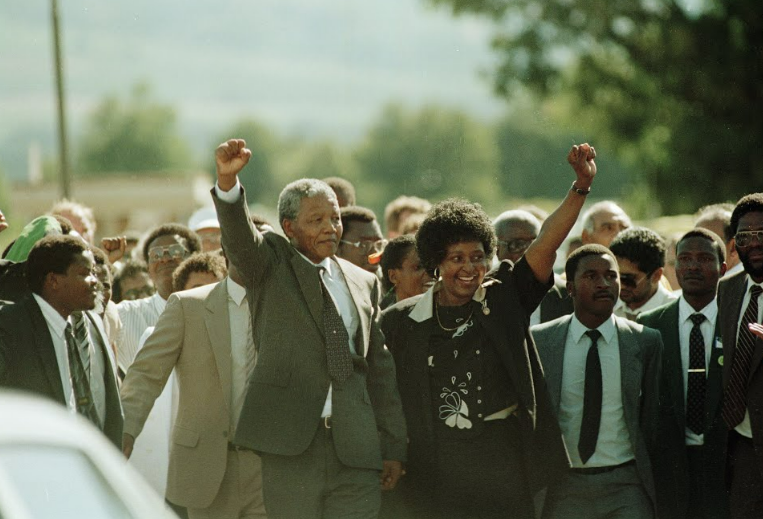
JOHANNESBURG, South Africa (BG) — Thirty-five years ago, on February 11, 1990, Nelson Mandela stepped out of Victor Verster Prison, raising his fist.

After 27 years behind bars, he was free—but his fight was far from over.

His release was a turning point in South Africa’s struggle against apartheid, the brutal system of racial segregation that had oppressed millions.

Yet, instead of seeking vengeance, Mandela chose a different path—reconciliation, peace, and unity.

‘An Ideal for Which I Am Prepared to Die’

Mandela’s freedom was decades in the making. Arrested in 1962 for his resistance to apartheid, he was sentenced to life imprisonment in 1964 alongside other anti-apartheid activists.

Speaking at his trial in Pretoria, he delivered words that would echo through history:

“During my lifetime I have dedicated myself to this struggle of the African people. I have fought against white domination, and I have fought against black domination. I have cherished the ideal of a democratic and free society in which all persons live together in harmony and with equal opportunities. It is an ideal which I hope to live for and to achieve. But if needs be, it is an ideal for which I am prepared to die.”

For decades, apartheid forced Black South Africans into second-class citizenship—segregated in schools, neighborhoods, workplaces, and daily life.

But Mandela’s release marked the beginning of the end. His freedom meant that change was not just coming—it was inevitable.

From Prisoner to President

Nine days before Mandela’s release, South African President F.W. de Klerk lifted the ban on the African National Congress (ANC), setting the stage for negotiations to dismantle apartheid.

Over the next four years, Mandela played a key role in those talks, ensuring the transition to democracy remained peaceful.

In April 1994, South Africans of all races voted in the country’s first democratic elections.

The result was historic: Mandela was elected South Africa’s first Black president.

“The time for the healing of the wounds has come. The moment to bridge the chasms that divide us has come. Never, never and never again shall it be that this beautiful land will again experience the oppression of one by another and suffer the indignity of being the skunk of the world. Let freedom reign. The sun shall never set on so glorious a human achievement!” — Mandela’s inaugural speech, May 10, 1994

Choosing Unity Over Revenge

Many expected Mandela to seek retribution for apartheid’s injustices. Instead, he chose reconciliation.

He established the Truth and Reconciliation Commission (TRC) to acknowledge past atrocities while promoting healing.

His message of unity became powerfully clear in 1995 when he wore the Springbok rugby jersey—a symbol of white South African identity—at the Rugby World Cup final.

The moment proved that the country could move forward together.

Reflecting on his freedom, Mandela later said:

“As I walked out the door toward the gate that would lead to my freedom, I knew if I didn’t leave my bitterness and hatred behind, I’d still be in prison.”

A Legacy That Lives On

Mandela remained a global symbol of justice and peace until his passing on Dec. 5, 2013, at 95.

His fight was never just for South Africa—it was for humanity. His words at the Organisation of African Unity (OAU) summit in 1994 underscored his lifelong belief in collective freedom:

“Africa shed her blood and surrendered the lives of her children so that all her children could be free… If freedom was the crown which the fighters of liberation sought to place on the head of Mother Africa, let the upliftment, the happiness, prosperity, and comfort of her children be the jewel of the crown.”

Today, 35 years after Mandela’s release, his legacy continues to inspire.

His journey from prisoner to president proved that even the most oppressive systems can be dismantled, and that leadership is not about power—but about uniting and uplifting others.

His freedom was not just his own. It was a victory for South Africa, Africa and the World.

Get the inside Story

Stay informed on the stories shaping Africa’s future. Get breaking news, in-depth analysis, opinions and exclusive insights from across the continent delivered to your inbox, free and unfiltered.


Get in touch for more:
Felix Tih
Editorial Director, Bantu Gazette
WhatsApp
LinkedIn
X (Twitter)
Instagram

Related Posts

Ghana’s Energy Sector Remains Country’s Biggest Economic Risk, Finance Minister Says
Politics & Economy

Ghana Clears $1.47 Billion in Energy Debts, Restores World Bank Guarantee

January 12, 2026
Ethiopia Breaks Ground on Africa’s Largest Airport
Politics & Economy

Ethiopia Breaks Ground on Africa’s Largest Airport

January 10, 2026
Egypt Tapped as Potential Hub for Pan-African Gold Bank
Politics & Economy

Egypt Tapped as Potential Hub for Pan-African Gold Bank

January 6, 2026
Equatorial Guinea Moves Capital from Malabo to Ciudad de la Paz
Finance

Equatorial Guinea Moves Capital from Malabo to Ciudad de la Paz

January 7, 2026
Rwanda Tops Africa in World Bank Business Ready Rankings
Politics & Economy

Rwanda Tops Africa in World Bank Business Ready Rankings

January 3, 2026
Nigeria’s Tinubu Hails Economic Growth After 2025 Gains, Tax Reforms
Politics & Economy

Nigeria’s Tinubu Hails Economic Growth After 2025 Gains, Tax Reforms

January 2, 2026

Most Recent

Nigeria, UAE Agree to Eliminate Tariffs on Over 7,000 Products
Energy & Trade

Nigeria, UAE Agree to Eliminate Tariffs on Over 7,000 Products

by Aissatou Fall
January 13, 2026
0

Nigeria and the United Arab Emirates on Tuesday signed a Comprehensive Economic Partnership Agreement that removes tariffs on more than...

Read moreDetails
Ghana’s Energy Sector Remains Country’s Biggest Economic Risk, Finance Minister Says

Ghana Clears $1.47 Billion in Energy Debts, Restores World Bank Guarantee

January 12, 2026
Eto’o Commends Morocco’s AFCON Hosting, Sportsmanship After Cameroon’s Exit

Eto’o Commends Morocco’s AFCON Hosting, Sportsmanship After Cameroon’s Exit

January 11, 2026
Africa’s Oldest Cremation Pyre Found in Malawi, Dating Back 9,500 Years

Africa’s Oldest Cremation Pyre Found in Malawi, Dating Back 9,500 Years

January 10, 2026
Ethiopia Breaks Ground on Africa’s Largest Airport

Ethiopia Breaks Ground on Africa’s Largest Airport

January 10, 2026
Kenya Secures Funds to Protect Reefs, Grow Coastal Economy

Kenya Secures Funds to Protect Reefs, Grow Coastal Economy

January 9, 2026
Morocco Leverages AFCON 2025 to Boost Global Tourism Visibility

Morocco Leverages AFCON 2025 to Boost Global Tourism Visibility

January 7, 2026
Nigeria, UAE Agree to Eliminate Tariffs on Over 7,000 Products
Energy & Trade

Nigeria, UAE Agree to Eliminate Tariffs on Over 7,000 Products

by Aissatou Fall
Reading Time: 1 min read
January 13, 2026
0

Nigeria and the United Arab Emirates on Tuesday signed a Comprehensive Economic Partnership Agreement that removes tariffs on more than...

Read moreDetails
Ghana’s Energy Sector Remains Country’s Biggest Economic Risk, Finance Minister Says
Politics & Economy

Ghana Clears $1.47 Billion in Energy Debts, Restores World Bank Guarantee

by Marcelo Edjang
Reading Time: 1 min read
January 12, 2026
0

The Government of Ghana paid about $1.47 billion in 2025 to clear energy sector arrears, restore a key World Bank...

Read moreDetails
Eto’o Commends Morocco’s AFCON Hosting, Sportsmanship After Cameroon’s Exit
Sports

Eto’o Commends Morocco’s AFCON Hosting, Sportsmanship After Cameroon’s Exit

by Elise Ntebah
Reading Time: 1 min read
January 11, 2026
0

Samuel Eto’o, president of the Cameroon Football Federation, praised Morocco for its exemplary organization and warm hospitality during the 2025...

Read moreDetails

35 Years Ago, Mandela Walked Free and History Changed Forever

35 Years Ago, Mandela Walked Free and History Changed Forever

35 Years Ago, Mandela Walked Free and History Changed Forever

JOHANNESBURG, South Africa (BG) — Thirty-five years ago, on February 11, 1990, Nelson Mandela stepped out of Victor Verster Prison, raising his fist.

After 27 years behind bars, he was free—but his fight was far from over.

His release was a turning point in South Africa’s struggle against apartheid, the brutal system of racial segregation that had oppressed millions.

Yet, instead of seeking vengeance, Mandela chose a different path—reconciliation, peace, and unity.

‘An Ideal for Which I Am Prepared to Die’

Mandela’s freedom was decades in the making. Arrested in 1962 for his resistance to apartheid, he was sentenced to life imprisonment in 1964 alongside other anti-apartheid activists.

Speaking at his trial in Pretoria, he delivered words that would echo through history:

“During my lifetime I have dedicated myself to this struggle of the African people. I have fought against white domination, and I have fought against black domination. I have cherished the ideal of a democratic and free society in which all persons live together in harmony and with equal opportunities. It is an ideal which I hope to live for and to achieve. But if needs be, it is an ideal for which I am prepared to die.”

For decades, apartheid forced Black South Africans into second-class citizenship—segregated in schools, neighborhoods, workplaces, and daily life.

But Mandela’s release marked the beginning of the end. His freedom meant that change was not just coming—it was inevitable.

From Prisoner to President

Nine days before Mandela’s release, South African President F.W. de Klerk lifted the ban on the African National Congress (ANC), setting the stage for negotiations to dismantle apartheid.

Over the next four years, Mandela played a key role in those talks, ensuring the transition to democracy remained peaceful.

In April 1994, South Africans of all races voted in the country’s first democratic elections.

The result was historic: Mandela was elected South Africa’s first Black president.

“The time for the healing of the wounds has come. The moment to bridge the chasms that divide us has come. Never, never and never again shall it be that this beautiful land will again experience the oppression of one by another and suffer the indignity of being the skunk of the world. Let freedom reign. The sun shall never set on so glorious a human achievement!” — Mandela’s inaugural speech, May 10, 1994

Choosing Unity Over Revenge

Many expected Mandela to seek retribution for apartheid’s injustices. Instead, he chose reconciliation.

He established the Truth and Reconciliation Commission (TRC) to acknowledge past atrocities while promoting healing.

His message of unity became powerfully clear in 1995 when he wore the Springbok rugby jersey—a symbol of white South African identity—at the Rugby World Cup final.

The moment proved that the country could move forward together.

Reflecting on his freedom, Mandela later said:

“As I walked out the door toward the gate that would lead to my freedom, I knew if I didn’t leave my bitterness and hatred behind, I’d still be in prison.”

A Legacy That Lives On

Mandela remained a global symbol of justice and peace until his passing on Dec. 5, 2013, at 95.

His fight was never just for South Africa—it was for humanity. His words at the Organisation of African Unity (OAU) summit in 1994 underscored his lifelong belief in collective freedom:

“Africa shed her blood and surrendered the lives of her children so that all her children could be free… If freedom was the crown which the fighters of liberation sought to place on the head of Mother Africa, let the upliftment, the happiness, prosperity, and comfort of her children be the jewel of the crown.”

Today, 35 years after Mandela’s release, his legacy continues to inspire.

His journey from prisoner to president proved that even the most oppressive systems can be dismantled, and that leadership is not about power—but about uniting and uplifting others.

His freedom was not just his own. It was a victory for South Africa, Africa and the World.

35 Years Ago, Mandela Walked Free and History Changed Forever

35 Years Ago, Mandela Walked Free and History Changed Forever

35 Years Ago, Mandela Walked Free and History Changed Forever

Felix Tihby Felix Tih
February 11, 2025

JOHANNESBURG, South Africa (BG) — Thirty-five years ago, on February 11, 1990, Nelson Mandela stepped out of Victor Verster Prison, raising his fist.

After 27 years behind bars, he was free—but his fight was far from over.

His release was a turning point in South Africa’s struggle against apartheid, the brutal system of racial segregation that had oppressed millions.

Yet, instead of seeking vengeance, Mandela chose a different path—reconciliation, peace, and unity.

‘An Ideal for Which I Am Prepared to Die’

Mandela’s freedom was decades in the making. Arrested in 1962 for his resistance to apartheid, he was sentenced to life imprisonment in 1964 alongside other anti-apartheid activists.

Speaking at his trial in Pretoria, he delivered words that would echo through history:

“During my lifetime I have dedicated myself to this struggle of the African people. I have fought against white domination, and I have fought against black domination. I have cherished the ideal of a democratic and free society in which all persons live together in harmony and with equal opportunities. It is an ideal which I hope to live for and to achieve. But if needs be, it is an ideal for which I am prepared to die.”

For decades, apartheid forced Black South Africans into second-class citizenship—segregated in schools, neighborhoods, workplaces, and daily life.

But Mandela’s release marked the beginning of the end. His freedom meant that change was not just coming—it was inevitable.

From Prisoner to President

Nine days before Mandela’s release, South African President F.W. de Klerk lifted the ban on the African National Congress (ANC), setting the stage for negotiations to dismantle apartheid.

Over the next four years, Mandela played a key role in those talks, ensuring the transition to democracy remained peaceful.

In April 1994, South Africans of all races voted in the country’s first democratic elections.

The result was historic: Mandela was elected South Africa’s first Black president.

“The time for the healing of the wounds has come. The moment to bridge the chasms that divide us has come. Never, never and never again shall it be that this beautiful land will again experience the oppression of one by another and suffer the indignity of being the skunk of the world. Let freedom reign. The sun shall never set on so glorious a human achievement!” — Mandela’s inaugural speech, May 10, 1994

Choosing Unity Over Revenge

Many expected Mandela to seek retribution for apartheid’s injustices. Instead, he chose reconciliation.

He established the Truth and Reconciliation Commission (TRC) to acknowledge past atrocities while promoting healing.

His message of unity became powerfully clear in 1995 when he wore the Springbok rugby jersey—a symbol of white South African identity—at the Rugby World Cup final.

The moment proved that the country could move forward together.

Reflecting on his freedom, Mandela later said:

“As I walked out the door toward the gate that would lead to my freedom, I knew if I didn’t leave my bitterness and hatred behind, I’d still be in prison.”

A Legacy That Lives On

Mandela remained a global symbol of justice and peace until his passing on Dec. 5, 2013, at 95.

His fight was never just for South Africa—it was for humanity. His words at the Organisation of African Unity (OAU) summit in 1994 underscored his lifelong belief in collective freedom:

“Africa shed her blood and surrendered the lives of her children so that all her children could be free… If freedom was the crown which the fighters of liberation sought to place on the head of Mother Africa, let the upliftment, the happiness, prosperity, and comfort of her children be the jewel of the crown.”

Today, 35 years after Mandela’s release, his legacy continues to inspire.

His journey from prisoner to president proved that even the most oppressive systems can be dismantled, and that leadership is not about power—but about uniting and uplifting others.

His freedom was not just his own. It was a victory for South Africa, Africa and the World.

Get the inside Story

Stay informed on the stories shaping Africa’s future. Get breaking news, in-depth analysis, opinions and exclusive insights from across the continent delivered to your inbox, free and unfiltered.


Get in touch for more:
Felix Tih
Editorial Director, Bantu Gazette
WhatsApp
LinkedIn
X (Twitter)
Instagram

Related Posts

Ghana’s Energy Sector Remains Country’s Biggest Economic Risk, Finance Minister Says

Ghana Clears $1.47 Billion in Energy Debts, Restores World Bank Guarantee

by Marcelo Edjang
January 12, 2026
0

...

Ethiopia Breaks Ground on Africa’s Largest Airport

Ethiopia Breaks Ground on Africa’s Largest Airport

by Maraki Desta
January 10, 2026
0

...

Egypt Tapped as Potential Hub for Pan-African Gold Bank

Egypt Tapped as Potential Hub for Pan-African Gold Bank

by Samira Benhadda
January 6, 2026
0

...

Equatorial Guinea Moves Capital from Malabo to Ciudad de la Paz

Equatorial Guinea Moves Capital from Malabo to Ciudad de la Paz

by Bantu Gazette
January 4, 2026
0

...

Rwanda Tops Africa in World Bank Business Ready Rankings

Rwanda Tops Africa in World Bank Business Ready Rankings

by Jane Mukami
January 3, 2026
0

...

Nigeria’s Tinubu Hails Economic Growth After 2025 Gains, Tax Reforms

Nigeria’s Tinubu Hails Economic Growth After 2025 Gains, Tax Reforms

by Cynthia N. Ganchok
January 2, 2026
0

...

Nigeria, UAE Agree to Eliminate Tariffs on Over 7,000 Products
Energy & Trade

Nigeria, UAE Agree to Eliminate Tariffs on Over 7,000 Products

by Aissatou Fall
Reading Time: 1 min read
January 13, 2026
0

Nigeria and the United Arab Emirates on Tuesday signed a Comprehensive Economic Partnership Agreement that removes tariffs on more than...

Read moreDetails
Ghana’s Energy Sector Remains Country’s Biggest Economic Risk, Finance Minister Says

Ghana Clears $1.47 Billion in Energy Debts, Restores World Bank Guarantee

by Marcelo Edjang
January 12, 2026
0

The Government of Ghana paid about $1.47 billion in 2025 to clear energy sector arrears, restore a key World Bank...

Eto’o Commends Morocco’s AFCON Hosting, Sportsmanship After Cameroon’s Exit

Eto’o Commends Morocco’s AFCON Hosting, Sportsmanship After Cameroon’s Exit

by Elise Ntebah
January 11, 2026
0

Samuel Eto’o, president of the Cameroon Football Federation, praised Morocco for its exemplary organization and warm hospitality during the 2025...

Africa’s Oldest Cremation Pyre Found in Malawi, Dating Back 9,500 Years

Africa’s Oldest Cremation Pyre Found in Malawi, Dating Back 9,500 Years

by Amani Mwakalebela
January 10, 2026
0

Archaeologists have uncovered Africa’s earliest known cremation at the base of Mount Hora in northern Malawi, dating to about 9,500...

Ethiopia Breaks Ground on Africa’s Largest Airport

Ethiopia Breaks Ground on Africa’s Largest Airport

by Maraki Desta
January 10, 2026
0

Ethiopia has broken ground on Bishoftu International Airport, a multi-billion-dollar project set to become the largest aviation infrastructure development in...

Next Post
Africa Joins the World in Empowering Women and Girls in Science

Africa Joins the World in Empowering Women and Girls in Science

Les Nations Unies saluent la résilience économique de la Côte d’Ivoire

Les Nations Unies saluent la résilience économique de la Côte d’Ivoire

Somaliland Attracts Global Investors, Seeks Trump’s Recognition

Somaliland Attracts Global Investors, Seeks Trump's Recognition

African Union Pushes for Visa-free Travel to Boost Integration 

African Union Pushes for Visa-free Travel to Boost Integration 

Bantu Gazette is a pioneering news platform that champions Africa's development, culture, and heritage. We spotlight the continent's successes, address its challenges, and provide insightful coverage of events that shape its future.

Bantu Gazette is a pioneering news platform that champions Africa's development, culture, and heritage. We spotlight the continent's successes, address its challenges, and provide insightful coverage of events that shape its future.

Our Platforms

  • Bantu Magazine
  • Bantu Brief
  • Black Frame Studio

Our Services

  • Bantu Agency
  • Advertise
  • Partnerships

Our Services

  • Editorial Director
  • Opportunities
  • Contact

Bantu Gazette is a pioneering news platform that champions Africa's development, culture, and heritage. We spotlight the continent's successes, address its challenges, and provide insightful coverage of events that shape its future.

Our Platforms

  • Bantu Magazine
  • Bantu Brief
  • Black Frame Studio

Our Services

  • Bantu Agency
  • Advertise
  • Partnerships

Our Services

  • Editorial Director
  • Opportunities
  • Contact
Bantu Gazette
  • Energy & Trade
  • Finance
  • Health
  • Politics & Economy
  • Technology
  • Environment
  • Feature
  • Opinion
  • Changemakers
  • Tourism & Culture
  • Magazine